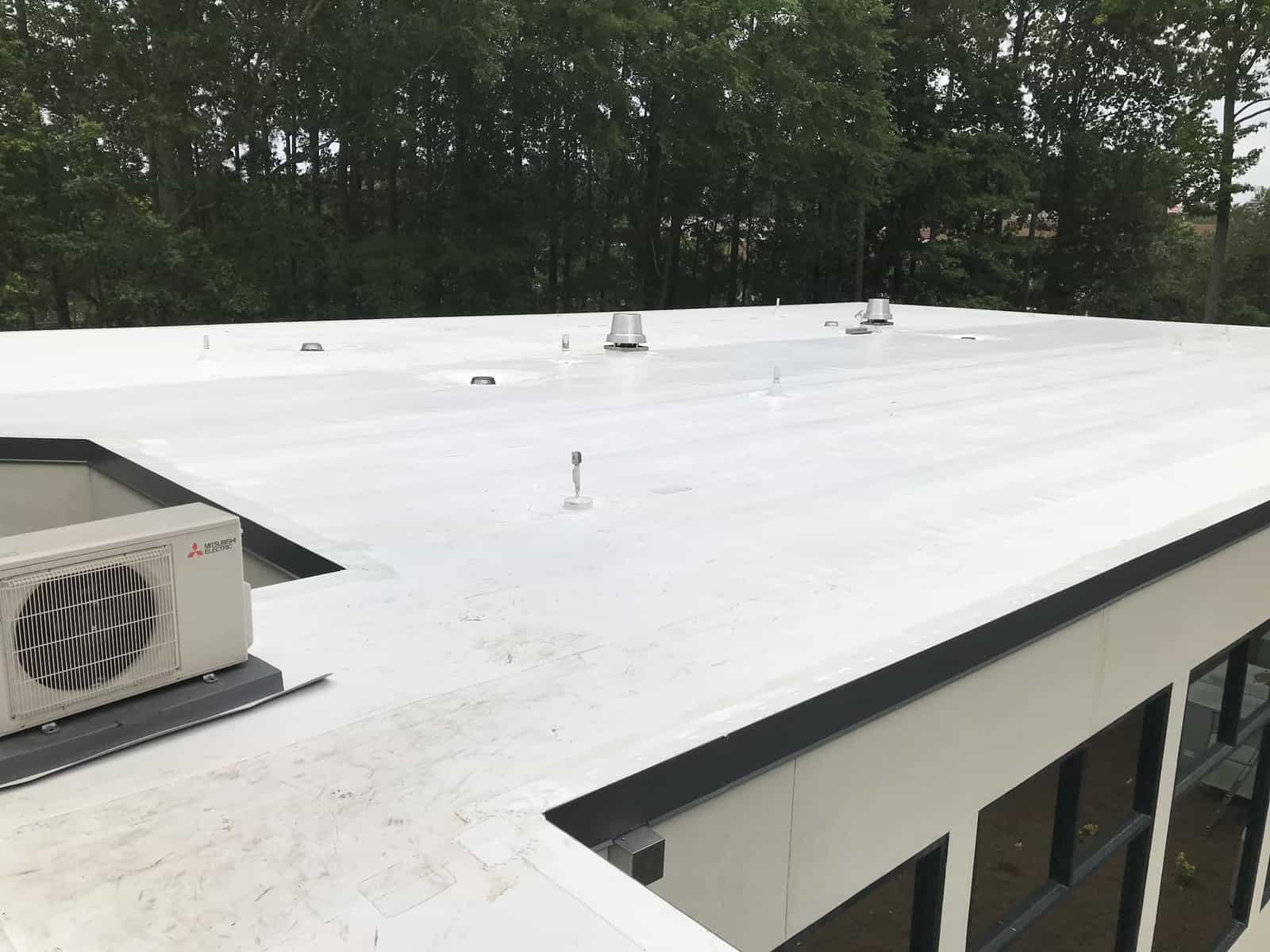
Written commercial roof inspection reports for Birmingham buildings - condition assessment, moisture probing, flashing audit, and capital planning documentation for Jefferson County property owners and facility managers. The work is planned around roof access, active building use, drainage, membrane condition, and the owner's timeline for repair, maintenance, or capital work.
Before recommending commercial roof inspections, we look at seams, flashings, penetrations, edge metal, drains, previous repairs, and any interior signs of water travel. That keeps the recommendation connected to the actual roof rather than a generic estimate.
What we look for
Commercial Roof Inspections reviews focus on the roof details that decide whether the work holds up over time.
- Drainage paths, internal drains, scuppers, and ponding areas are photographed and noted.
- Membrane seams, fasteners, patches, and weathered field areas are reviewed for active risk.
- Curbs, penetrations, rooftop units, skylights, parapet walls, and edge metal are checked for movement or openings.
- Repair history, coating age, warranty limits, and replacement triggers are separated in the written notes.
From roof concern to written scope.
Walk and document
Commercial Roof Inspections begins with a roof walk that records membrane condition, drainage, penetrations, edge details, rooftop traffic, and known leak history.
Compare practical options
Commercial Roof Inspections options are weighed against roof condition, budget timing, and building operations.
Close with a usable record
The final commercial roof inspections recommendation is written so owners can share it with property managers, tenants, insurers, lenders, or capital decision makers.
Closeout notes
When commercial roof inspections in birmingham is complete, the property team receives notes, photos, and guidance that can be kept with building records, so the next decision starts from evidence instead of guesswork.